Author: Michael Barnard

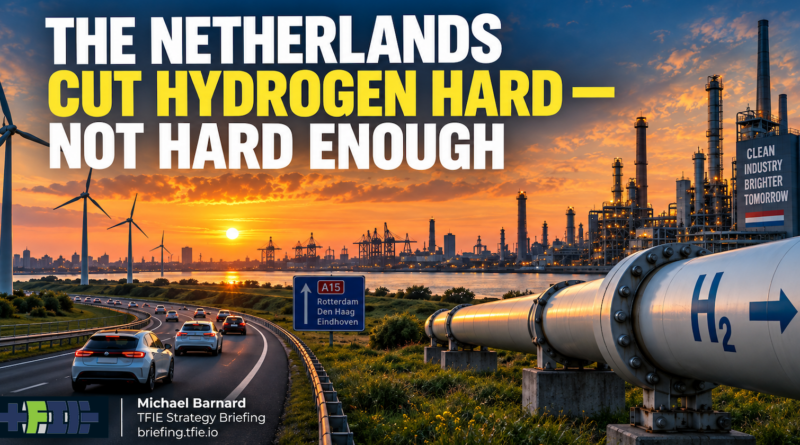
Netherlands Cuts 2040 Hydrogen Forecast By Almost 60%

Three years is a long time in hydrogen strategy. The Netherlands’ 2023 National Energy System Plan projected roughly 460 petajoules of gaseous hydrogen demand in 2040. Its 2026 National Energy System Plan update cuts that central estimate to about 200 PJ, a reduction of roughly 57%. This is especially interesting … [continued]
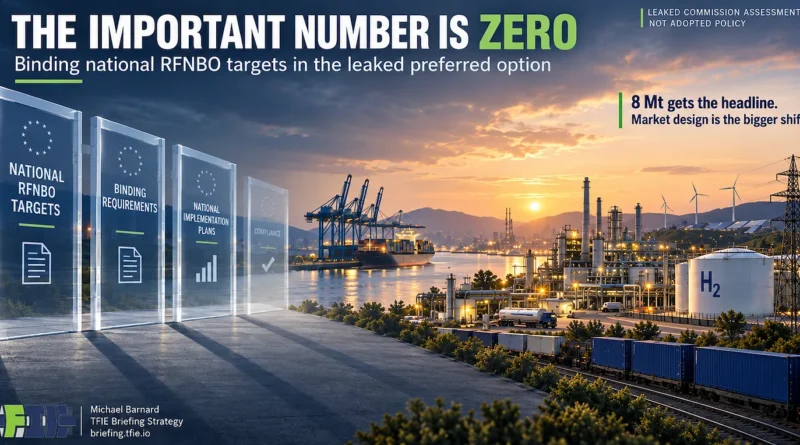

Leaked EU Hydrogen Draft Moves From Quotas To Credits

Europe’s current Renewable Energy Directive requires renewable fuels of non-biological origin, or RFNBOs, to account for at least 42% of relevant industrial hydrogen use by 2030 and 60% by 2035, subject to exclusions and flexibilities. Those provisions do more than subsidize hydrogen production. They create a specified market for a … [continued]

Why Tugboats Fit Batteries Better Than Their Power Ratings Suggest

Tugboats do not initially look like good candidates for battery propulsion. A harbour tug has to shove, pull and control ships weighing tens or hundreds of thousands of tonnes, sometimes in wind, current and confined channels where losing thrust is not an acceptable outcome. Modern ship-assist tugs consequently carry propulsion … [continued]

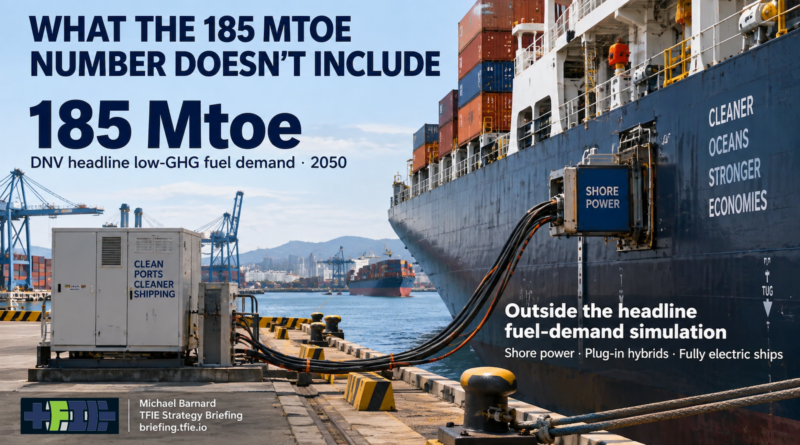
DNV’s 2050 Fuel Forecast Leaves Out Electrification

DNV’s new Maritime Forecast to 2050 puts a very large number on shipping’s future demand for low-carbon molecules. In its strongest global-regulation scenario, internationally operating ships above 400 gross tonnes require about 185 million tonnes of oil equivalent of low-GHG fuel in 2050, roughly 7.7 to 7.8 exajoules. That implies … [continued]

China Is Doing About 30 Times More Agricultural Drone Work Than The U.S.

Agricultural spray drones are no longer an emerging technology in China. They are ordinary farm machinery at extraordinary scale. China entered 2026 with about 309,000 plant-protection drones, and those aircraft performed roughly 203 million hectare-treatments during 2025. A hectare treated three times counts as three hectare-treatments, so that figure measures … [continued]

China’s Electric Aviation Advantage Is A Transport System, Not A Prototype

The electric-aviation contest is often presented as a race between aircraft startups. That is probably the wrong unit of analysis. An airplane that flies once, wins a certification milestone or accumulates a large order book has demonstrated something useful, but it has not demonstrated an industry. What matters is whether … [continued]

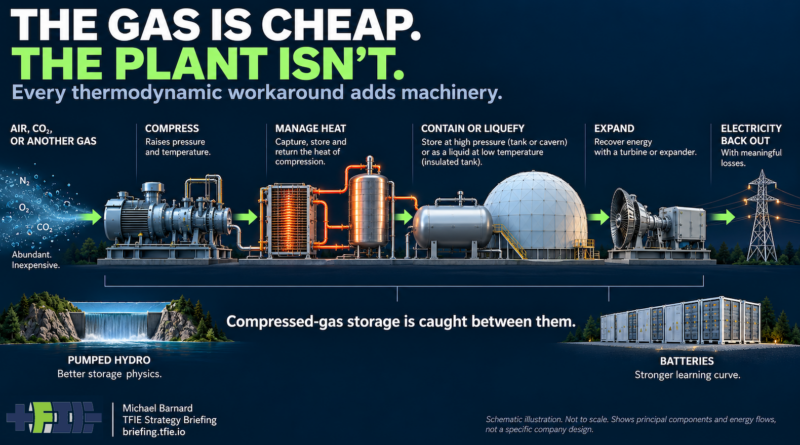
Compressed-Gas Storage Demonstrators Got Bigger. The Economics Didn’t Get Better.

Two years ago I called compressed-gas electricity-storage claims mostly hot air. Since then the sector has produced exactly the sort of evidence that should force a reassessment rather than a repetition of the old argument. China has commissioned the 600 MW / 2.4 GWh Huai’an compressed-air demonstration, Hydrostor has pushed … [continued]

Farm Electrification Should Start With The Work, Not The Tractor

Ask whether agriculture can electrify and the conversation usually arrives at the same machine within minutes: the tractor. More specifically, the large diesel tractor working hard through planting, harvest or another narrow seasonal window. It is a legitimate engineering challenge, but it is a poor organizing principle for farm electrification. … [continued]

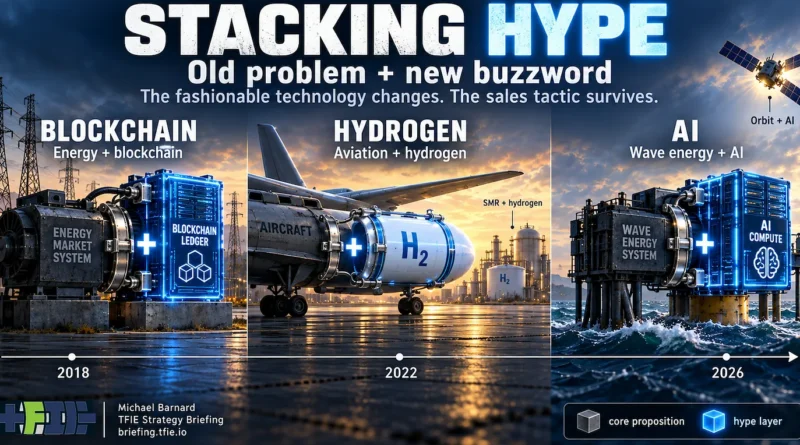
AI Is Climate Tech’s Newest Hype Layer — The Commercial Problems Are Older

Panthalassa raised $140 million this year to build autonomous ocean platforms that would generate electricity from waves and use it directly for AI inference computing at sea. The proposition removes one genuine problem for wave energy: instead of transmitting electricity back to shore through subsea cables and grid connections, put … [continued]

UK Trying to Advance Hydrogen Aviation. Likelihood by 2050 is still under 1%

The UK Civil Aviation Authority announced its latest Hydrogen Challenge in the same week as I published my updated assessment of hydrogen passenger aviation. The regulator is examining hydrogen-aircraft turnarounds at London City Airport, cryogenic hydrogen storage and airside supply, while its broader hydrogen aviation roadmap targets scaled operations for … [continued]